Stress and Diabetes: Why Stress is the Silent Destroyer of Diabetes Management
May 02, 2024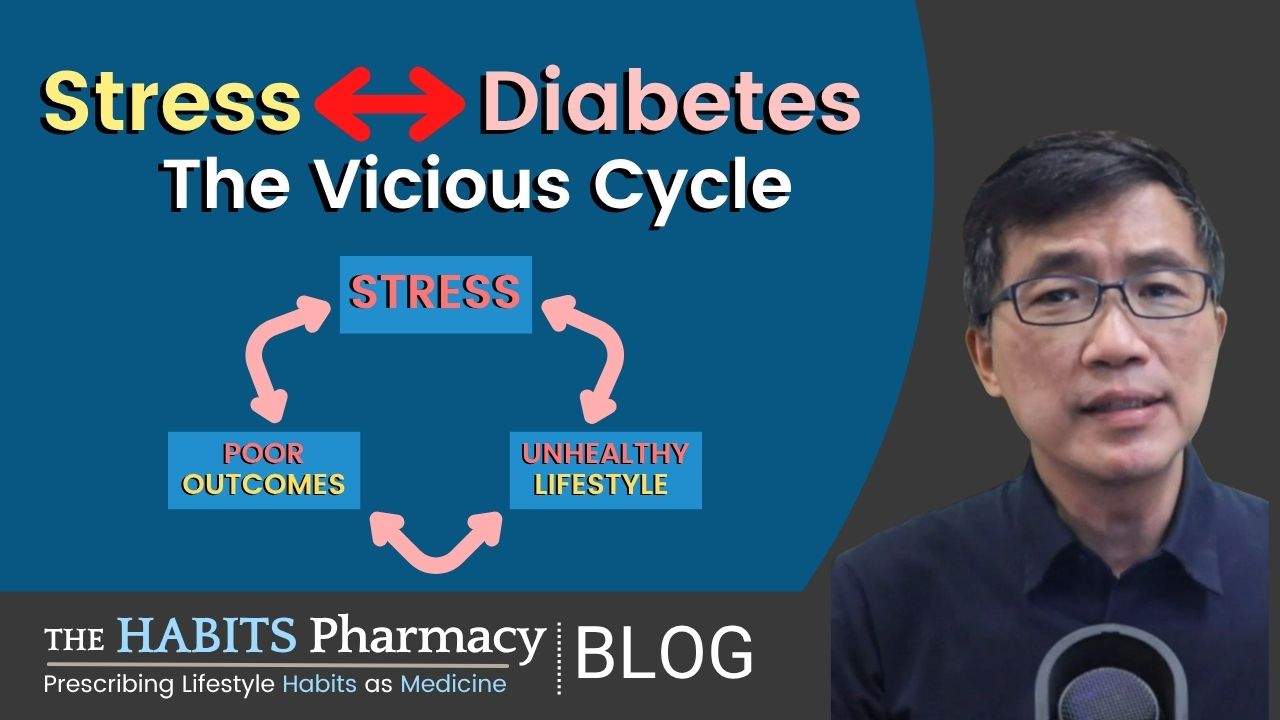
Does stress make diabetes worse? Yes. Stress directly worsens diabetes through a self-reinforcing vicious cycle that affects blood sugar control, lifestyle habits, and long-term diabetes outcomes simultaneously.
Stress and Diabetes: Why Stress is the Number One Overlooked Wrecker of Diabetes Management
When I coach patients with diabetes on optimising their lifestyle, they almost always ask me the same two questions. How do I improve my diet to lower my blood sugar? What exercise would you prescribe to improve my diabetes management?
Almost nobody asks me about stress management. Not unless I bring it up first.
This is a very common and very serious mistake. Because stress is the silent destroyer of optimal diabetes management, the number one most overlooked factor in achieving the best possible outcomes in blood sugar control.
In this post I want to explain exactly why I say that, and why understanding the vicious cycle of stress and diabetes could change how you approach your condition.
What is the Vicious Cycle of Stress and Diabetes?
The relationship between stress and diabetes is not a one-way street. It operates as a self-reinforcing loop that, if left unaddressed, cascades progressively over time.
Here is how the cycle works:
Stress leads to unhealthy lifestyle choices, including poor diet, lack of exercise, disturbed sleep, and many other unhealthy habits. These unhealthy lifestyle factors in turn lead to poorer outcomes in diabetes management, including poor blood sugar control and an increased risk of diabetes complications. And many people with diabetes would understandably become stressed by their worsening condition. That stress then drives further unhealthy lifestyle choices, and the cycle repeats.
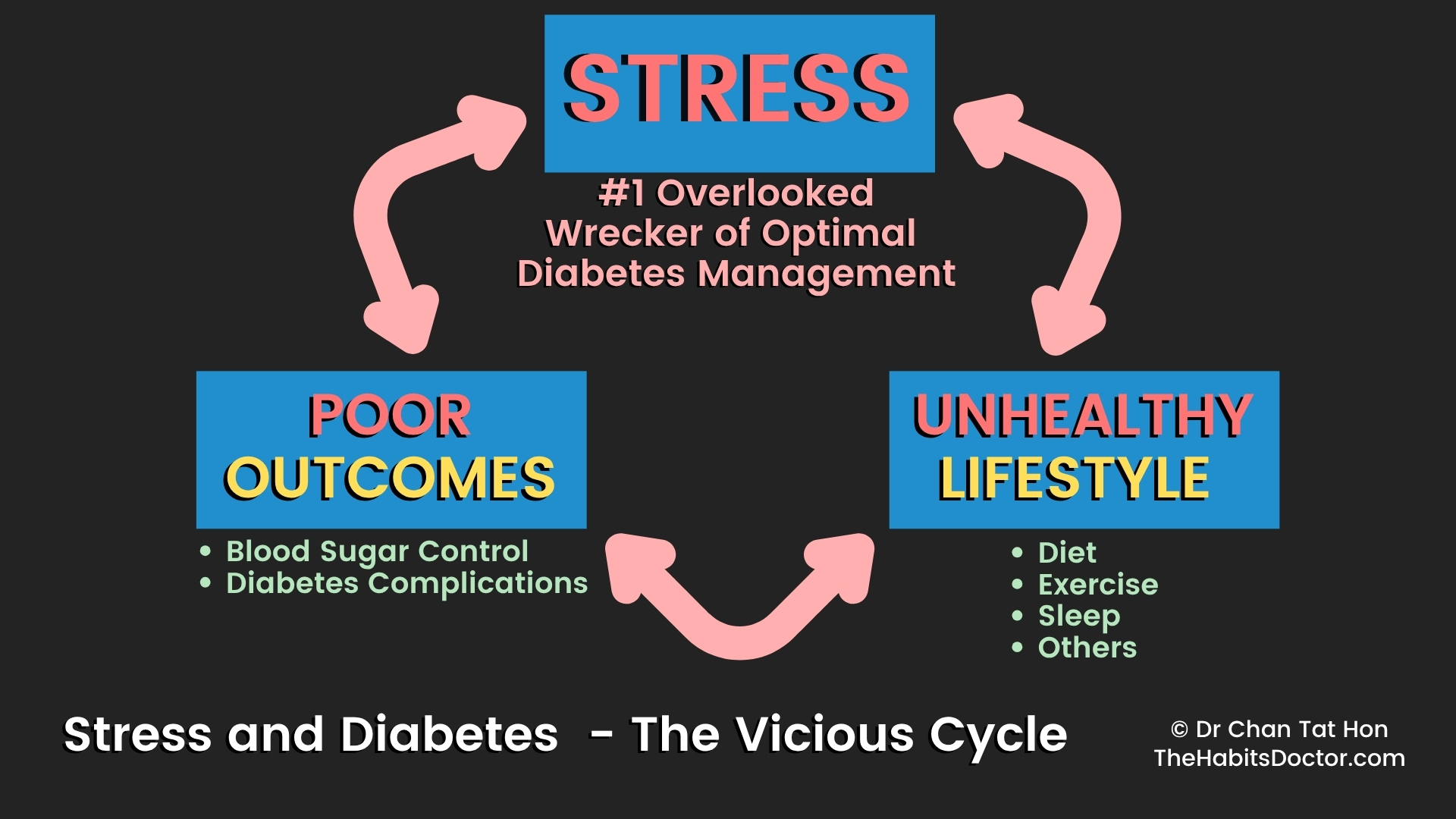
Graphic : Stress and Diabetes: The Vicious Cycle - showing how stress leads to unhealthy lifestyle, which leads to poor diabetes outcomes, which creates more stress
But the cycle does not stop there. Stress in itself is also a significant contributory factor to poor blood sugar control and an increased risk of diabetes complications, independent of its effects on lifestyle. And poor diabetes control and its complications make it even harder to practice the healthy lifestyle needed to manage diabetes effectively.
For example, poor blood sugar control can lead to frequent urination at night, causing disturbed sleep. Certain diabetes complications can limit the type or level of exercise a person can do. And unhealthy lifestyle habits in themselves can generate higher levels of stress. Each element feeds every other element. That is why I call it a vicious cycle.
Why Stress is the Silent Destroyer of Diabetes Management
I use the term "silent destroyer" deliberately. Unlike a bad meal or a missed gym session, the damage that stress does to diabetes management is largely invisible. People do not connect the stress they experienced at work last week with the blood sugar reading that surprised them this morning. They do not see the link between their anxiety about their condition and the fact that their condition is worsening.
This invisibility is precisely what makes stress so dangerous. Most people with diabetes are working hard on their diet and exercise. But if stress is simultaneously driving poor food choices, disrupting sleep, reducing physical activity, and worsening insulin resistance, all of that effort is being undermined from within.
I have seen this pattern repeatedly in my patients. People who are doing everything right by conventional measures and still not seeing the results they should, because stress is the hidden variable nobody is accounting for.
The Cascade: How Stress Compounds Over Time in Diabetes
What makes the vicious cycle particularly damaging in diabetes is the compounding effect. Each revolution of the cycle tends to be worse than the last. Worsening blood sugar control leads to more complications. More complications generate more stress. More stress drives more unhealthy lifestyle choices. Poorer lifestyle choices accelerate disease progression.
Left unaddressed, it creates a vicious cycle that eventually ends in diabetes progression and severe complications. That is why I am so direct with my patients about the importance of stress management. It is not a nice-to-have addition to their diabetes care plan. It is a core requirement for achieving the best possible outcomes.
Many people overlook stress management in the belief that if they can just get their diet right and exercise more, everything else will follow. That belief costs them. The research is clear: stress management is an essential pillar of holistic diabetes management, not a peripheral one.
Turning the Vicious Cycle Into a Virtuous Cycle
The encouraging news is that the cycle can be reversed. The same interconnected nature that makes the vicious cycle so damaging also means that positive changes propagate through the system. When stress is reduced, lifestyle choices improve. When lifestyle choices improve, blood sugar control improves. When blood sugar control improves, the sources of stress related to worsening diabetes diminish. A virtuous cycle begins to replace the vicious one.
This is not wishful thinking. It is the mechanism behind every successful case of diabetes reversal through lifestyle modification that I have seen in clinical practice. Stress management is should be seen as a separate track from the dietary and exercise interventions. It must be rightly appreciated as one of the pillars of holistic and optimal diabetes management.
If you are managing type 2 diabetes and stress management is not part of your plan, it needs to be. :
You may also want to read: Can Type 2 Diabetes Be Reversed? Dr Chan answers.
You might also be interested in this: Reversing Type 2 Diabetes - Essential Basics: A Structured Online Learning Programme
And the companion post to this one: 7 Ways Stress Affects Your Blood Sugar Levels, which goes into the specific hormonal and physiological mechanisms through which stress impacts your blood sugar directly.
Watch the Video
In this episode of The Habits Pharmacy Podcast, I explain why I call stress the silent destroyer and the number one most overlooked wrecker of optimal diabetes management, and walk through the vicious cycle that makes it so damaging. Watch the full video below.
Video Synopsis
In this short video, I highlight a common and serious mistake I see many people with diabetes make: overlooking the critical role of stress management in achieving optimal blood sugar control and diabetes outcomes. I explain the vicious cycle of stress and diabetes, where stress drives unhealthy lifestyle choices, unhealthy lifestyle leads to poor diabetes outcomes, and poor outcomes generate further stress. I also explain why stress functions as a direct contributor to poor blood sugar control and diabetes complications, independent of its effects on lifestyle behaviour. I conclude by calling on people with diabetes to pay far more attention to stress management as an essential and non-negotiable pillar of holistic diabetes care.
Full Video Transcript
The following is the full transcript of the video above.
Stress is the number one the most overlooked wrecker of optimal management of diabetes is the topic of this episode of The Habits Pharmacy Podcast. I'm Dr Chan, your host. Today I want to highlight a very common and serious mistake that I see many people including my patients make in managing diabetes and that is that many people overlook the importance of stress management in achieving the best possible outcome in blood sugar control and overall diabetes management.
When coaching my patients with diabetes on optimizing their lifestyle to better control and combat diabetes, many of them would ask me. "Doctor, how do I improve my diet to lower my blood sugar?" or "Doctor, what exercise would you prescribe to me to improve my diabetes management?" but almost nobody would ask me about stress management unless I bring it up, because many people overlook the importance of tackling stress, reducing stress, building stress resilience in order to combat diabetes effectively, holistically and optimally.
I often call stress the silent destroyer, the number one most overlooked wrecker of optimal diabetes management. Let me explain why I say that.
Stress often leads to unhealthy lifestyle choices, unhealthy diet, lack of exercise, poor sleep and many other unhealthy lifestyle, which in turn, leads to poor outcomes in diabetes management, including poor blood sugar control and increase in diabetes complications. And many people with diabetes, would understandably, be stressed by their worsening diabetes conditions. Can you see what is happening here? This vicious cycle happening, of stress leading to unhealthy lifestyle choices, which leads to poorer outcomes in diabetes management, which then become another an additional source of stress. And the vicious cycle cascades.
Not only that, stress in itself is a significant contributory factor to poor blood sugar control and the increased risk for diabetes complications. And poor diabetes control and complications often makes it even more difficult to practice the healthy lifestyle needed to control and combat diabetes. For example, poor blood sugar control can lead to frequent urination at night, causing disturbed sleep, or certain diabetes complications limiting the level or the type of exercise that one can do. And lastly unhealthy lifestyle in itself can lead to higher levels of stress in many ways.
A vicious cycle then happens, that is why I call stress the number one the most overlooked wrecker of optimal diabetes management. And we need to break this vicious cycle by paying more attention to stress management, we need to put into more effort to build greater resilience to stress by various stress management practices and lifestyle habits that will help to relieve stress, so as to break this vicious cycle caused by stress. In order to turn this vicious cycle to this virtuous cycle, we must not forget the importance of paying attention to stress management in the holistic management of diabetes so as to achieve the most optimal and best possible health outcomes in spite of having diabetes.
I hope you have found this video useful. You can visit my website www.DiabetesOvercomers.com for my other diabetes-related videos as well as any upcoming diabetes related workshops and programs. I'm Dr Chan, Let Habits be Thy Medicine.
---------- End of video transcript ----------
Related Posts
- 7 Ways Stress Affects Your Blood Sugar Levels and Diabetes Outcomes
- Can Diabetes be reversed? Dr Chan's FAQs
- My Passion: Helping More People Reverse Their Diabetes
- Case Studies of Diabetes Reversal
- 3 Most Underrated Lifestyle Habits for Combating Diabetes

About Dr Chan, Founder & Medical Director of The Habits Pharmacy
Dr Chan is a medical doctor from Singapore who trains and coaches people to holistically review, change and improve their Lifestyle & Dietary Habits to prevent, control and combat Diabetes, Hypertension, High Cholesterol, Cardiovascular Diseases and other Lifestyle & Diet related chronic diseases. Find out more about Dr Chan, his work, 1-1 coaching programmes, workshops & courses, click on the Find out More button below.
Subscribe to
The HABITS Pharmacy - Habits as Medicine
newsletter
for regular tips & updates on courses and workshops to be equipped to unlock the Power of Habits as Medicine to Prevent and Combat Lifestyle-related chronic diseases.
Unsubscribe anytime