Is Basmati Rice Good for Diabetes? 4 Mistakes Diabetics Make
May 09, 2026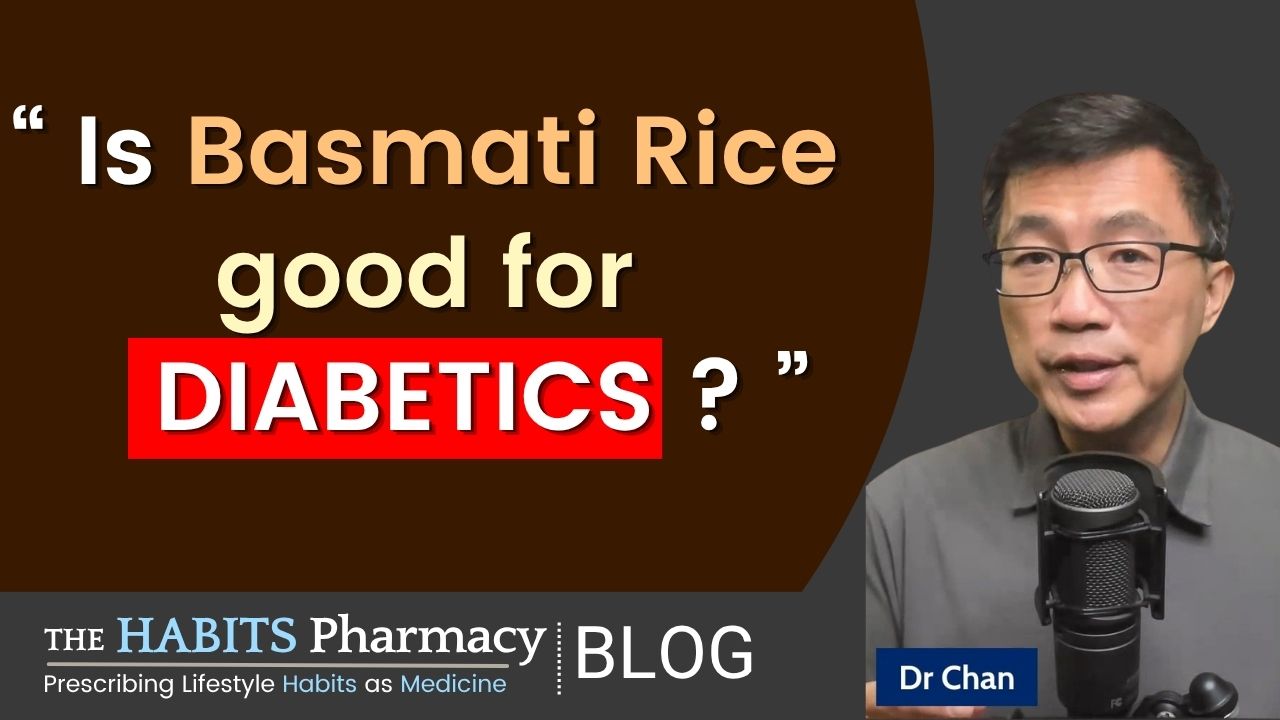
Is basmati rice good for diabetes? The short answer is: basmati rice can be a better choice of rice for diabetics than most other varieties, but the question should not be whether it is better in some way to some degree for diabetics to better their diabetes, the more important question should be to what degree?
I share in this post, four common mistakes that diabetics make when considering the switch to basmati rice, when they ask the question "Is basmati rice good for diabetes?"
I hear this question constantly from my patients. "Doctor, I have already switched to basmati rice because I heard it is good for diabetes and good for my blood sugar." I am glad they have taken a step. But when I review their eating habits in detail, I often find that they had unrealistic expectations on how much they expect that single switch of choice of rice to basmati rice can do for their overall diabetes management.
Watch my video below, or read on for the full answer.
Watch: Is Basmati Rice Good for Diabetics? Dr Chan Explains the 4 Mistakes
Is Basmati Rice Good for Diabetes? The Short Answer.
Yes, basmati rice is generally a better choice for people with diabetes than most other commonly eaten rice varieties. Its glycemic index typically falls in the low 50s to low 60s, which is lower than jasmine rice, short-grain white rice, and many other staple varieties.
That is a fact. Basmati rice is generally a good choice for diabetics, but the problem is the unrealistic expectations and wrong translation into action that arise from this fact for many diabetics.
But here is what I see in my clinic, again and again. People with diabetes make the switch to basmati rice, feel they have done something meaningful for their health, and then stop there. They carry a set of wrong assumptions about what basmati rice is, what its low GI label actually means, and what one food swap can realistically do for blood sugar control.
These wrong assumptions are the four mistakes. Let me go through each one.
Mistake 1: Assuming All Basmati Rice Is the Same. It Is Not.
Many people think that choosing basmati rice over jasmine rice or white rice is the whole decision. It is not.
Basmati rice, like all rice varieties, comes in two forms. White basmati rice is refined grain. The bran layer has been removed. Brown basmati rice is whole grain. The bran layer is intact.
This distinction matters for the same reasons it matters with any grain. Whole grain brown basmati has more fibre, more nutrients, and a somewhat lower glycemic index than white basmati. When a person with diabetes tells me they have switched to basmati rice, the first question I ask is: white or brown?
Most of the time, they have switched to white basmati. They did not know there was a whole grain version. Or they assumed that all basmati rice was already a whole grain food because of its health reputation.
Can you see what is happening here? The switch was made. But it was not the switch they thought it was.
If you want to eat basmati rice for health reasons and you have diabetes, choose brown basmati rice where possible. Check the packaging carefully. The words "whole grain" or "brown" should be visible. Do not assume.
Mistake 2: Assuming All Basmati Rice Is Low GI. Not All of It Is.
This is one of the most common wrong assumptions I encounter among diabetics who have switched to basmati rice.
Basmati rice is not all low GI. Its glycemic index ranges from the low 50s to the low 60s depending on the specific variety, where it was grown, how it was processed, and whether it is white or brown. A GI of 55 or below qualifies as Low GI. A GI of 56 to 69 is Medium GI.
This means some basmati rice is genuinely low GI. And some is not.
The only way to know for certain whether the specific bag of basmati rice you bought is low GI is to check the packaging for a certified GI value or a Low GI label. A Low GI label on packaging means that specific product was sent to a testing laboratory, tested, and confirmed to have a GI of 55 or below. If there is no GI value or label on the packaging, you cannot assume it is low GI. You can only say its GI is likely somewhere in the range of 50 to 60-plus.
I have a detailed post and video specifically on the glycemic index of basmati rice if you want to go deeper on this point. The link is in the related posts section below.
Mistake 3: Assuming Low GI Basmati Rice Will Definitely Mean Lower Blood Sugar Spikes for Diabetics.
This is the mistake that concerns me the most. And it is very common.
Even if the basmati rice you bought has a certified Low GI label on its packaging, that does not mean eating it will definitely result in lower blood sugar spikes for you personally.
Let me explain. The glycemic index of a food is measured under specific laboratory conditions. Real eating is not a laboratory. Your blood sugar response after a meal is affected by many factors beyond just the GI of one ingredient in that meal.
It is affected by how much rice you eat. By what else is on your plate. By how the rice was cooked. By whether the rice was eaten hot or cooled before eating. And importantly, by your own insulin sensitivity and insulin production, which vary from person to person and change over time.
Every person with diabetes is different. Two people eating identical portions of the same low GI basmati rice from the same bowl can have genuinely different blood sugar responses. This is not a theoretical concern. I see it regularly in my coaching work.
So knowing that your basmati rice is low GI is useful information. But it is one piece of a much larger picture.
Mistake 4: Expecting Basmati Rice to Do More for Diabetes Than One Food Swap Can Ever Do.
This is the mistake I want to spend the most time on. Because in my experience coaching diabetics to make dietary habits change to better manage their diabetes, it is the most consequential.
I have lost count of the number of times a patient has told me: "Doctor, my diet is already much healthier now. I used to eat white rice, but now I eat basmati rice." And they say this with genuine confidence. As if the switch alone represents a meaningful transformation in their overall eating habits.
When I review their diet in detail, I often find that other than the rice switch, little else has changed. The sugar intake is still high. The vegetable intake is still very low. The overall eating pattern is still one that would drive blood sugar in the wrong direction for a person with diabetes.
Do not misunderstand me. I am not dismissing the switch to basmati rice. Every step in the right direction matters. Every baby step forward, however small, deserves to be acknowledged and encouraged.
But I want to be direct with you. Switching the variety of rice you eat is one baby step, but often not the most pressing or impactful step. Controlling and combating diabetes well requires many more steps. It requires a comprehensive review of all aspects of your eating habits. Not just the rice.
The healthy halo around basmati rice is real and the unrealistic expectations of what that single switch can do for diabetics is not just common but also very unhelpful, because it can wrongly create a false sense of progress. A feeling that the work is done when it has barely begun.
If you have diabetes and your goal is to better control your blood sugar, or to reverse your diabetes if that window is still open for you, switching to basmati rice should only be seen as the first baby step of many. Not the only one. As I said before, let me say it bluntly again, switching to basmati rice may be a helpful step for management of diabetes, but it is often not amongst the most impactful or pressing steps that most diabetics actually need if they truly want to move the needle in their blood sugar control and diabetes management.
The More Important Question for People with Diabetes
After I explain these four mistakes to my patients, most of them nod and then ask: "So Doctor, what should I actually be doing?"
That is the follow-up question I hope I get from diabetics I coach.
The answer is not about rice, or at least not just about rice, and definitely not very much about switching to basmati rice or not. It is about the WHOLE of your lifestyle and eating habits and how all of them together affect your blood sugar, your insulin sensitivity, and their impact on diabetes progression and diabetes complications in the entirety of your lifetime, not just the sugar spike in the next meal.
Which rice you buy from the supermarket matters less than how much rice you eat, how often you eat it, what you eat it with, how active you are, how well you sleep, and how you manage stress. All of these factors interact. No single food swap, however sensible, can substitute for getting the whole picture not just right, but adequately improved.
As I am often heard saying at workshops or talks - Anything worth doing, is worth doing resolutely, consistently, persistently. And doing whatever one is willing and able to at any point in time to improve ALL aspects of lifestyle to tackle ALL aspects of diabetes management is certainly something worth doing for diabetics who want to be proactive and overcome diabetes.
Learning About Reversing Type 2 Diabetes
If you have diabetes and are not as equipped with the essential foundational knowledge about reversing Type 2 diabetes as you should be, I have a structured online learning programme that you might find very useful. You can find out more through the link below.

Frequently Asked Questions
Is basmati rice better than white rice for diabetics?
Yes, in general. Basmati rice has a lower glycemic index than most common white rice varieties such as jasmine rice or short-grain white rice. This means it tends to raise blood sugar more slowly. However, the difference should not be overstated, and the amount eaten and the overall meal composition still matter significantly.
Is brown basmati rice better than white basmati rice for people with diabetes?
Brown basmati rice is the whole grain version of basmati. It retains the bran layer, which provides more fibre and a somewhat lower glycemic impact than white basmati. For people with diabetes who choose to eat basmati rice, brown basmati is generally the better choice. Check the packaging for the words "whole grain" or "brown" to confirm.
Related Posts
- Is Basmati Rice Low GI? Are All Basmati Rice Low Glycemic Index?
- Are Oats Good for Diabetes?
- Can Type 2 Diabetes Be Reversed? Dr Chan answers.
- Reversing Type 2 Diabetes: Essential Basics - Structured Online Learning Programme
About This Video
In this episode of The Habits Pharmacy Podcast, I share the four most common mistakes I see people with diabetes make when they switch to basmati rice for health reasons. The mistakes range from wrong assumptions about what basmati rice actually is, to unrealistic expectations of what one food swap can do for blood sugar control and diabetes management. This is drawn directly from years of clinical work coaching patients with diabetes.
Full Transcript
The following is the full transcript of the video above.
Today. I want to highlight the four mistakes that I see many people make when they choose to switch the choice of rice to Basmati Rice for health reasons. If you have also switched to or are thinking of switching the Basmati Rice, I hope this sharing will help you avoid making these mistakes.
Basmati Rice, a variety of long grain rice, very popular here in Asia and around the world is not only winning friends over because of its taste and texture, but also because it is gaining reputation as a healthier choice when it comes to rice variety options for people who like rice or for whom rice is the staple food.
I do a lot of work in the area of training and coaching people, including my patients to change and improve their lifestyle, eating habits, to better control and combat their diabetes or other lifestyle related chronic conditions. And for my work, I have come across many people who have made the conscious switch from other varieties of rice to Basmati Rice, because they have read somewhere or heard from friends that Basmati Rice rice is a healthier choice for rice, especially amongst my patients or workshop participants with diabetes.
I've lost count of the number of times that I have heard, "Doctor, ever since I got diabetes, I have switched to Basmati Rice because I've heard that it is good for people with diabetes or it is lower in GI or glycemic index and good for my blood sugar. And I found that many of these people, perhaps distracted by the healthy halo, the reputation of Basmati Rice had wrongly assumed that all Basmati Rice are the same, or have the wrong and unrealistic expectations of what the switch of choice of rice variety to the healthier Basmati Rice can do for their blood sugar control or for the health.
So I decided to make this, the topic of this episode that is to highlight the four mistakes that I see people make when they choose to switch their choice of rice to Basmati Rice for health reasons, so that you may avoid making the same mistakes.
Welcome to another episode of The Habits Doctor Pharmacy Podcast, where Habits become Medicine. For those of you who are new to this podcast. I am Dr. Chan, your host. I am a medical doctor from Singapore. My work and passion is in activating and empowering people to modify their lifestyle and eating habits to combat diabetes, cardiovascular disease, and other chronic diseases modifiable by lifestyle changes.
What common mistakes do you think people who switch to Basmati Rice for health reasons usually make? what do you think? For me, from my experience, working with people, including my patients who are consciously making changes to their diets for health reasons, these are the four mistakes I see these people make.
Mistake number one is that many people, somehow wrongly assume that all Basmati Rice are the same or that they are all whole grain, or that all Basmati Rice are low GI, that their classmate index is low. Or when they see that there is a low GI label on the packaging of the Basmati Rice that they bought, they wrongly assume that it would therefore definitely mean that taking this Basmati Rice will lead to lower blood sugar spikes compared to eating other varieties of rice. Lastly, the worst mistake of all in my opinion is that many people have the wrong and very unrealistic expectations of what switching to Basmati Rice can do for their health.
Of this four mistakes that I have highlighted here, for the first three of them. I've done detailed videos tackling each of these four mistakes specifically. They are on my other YouTube channel. This channel that you are on now is my second YouTube channel specifically for my podcast, where I focus on tackling mistakes, misconceptions, and mindsets related to lifestyle diets in chronic diseases.
When people ask me why I have two separate YouTube channels, I always explain that this channel is about giving people inspiration whilst my other channel is about giving people information and you need both in order to change and improve lifestyle, eating habits to combat diabetes, cardiovascular disease, and other lifestyle related chronic diseases. And for those of you who are already subscribers on my main channel, you might want to subscribe to this channel as well.
Now let's tackle the first mistake that people make when switching the choice of rice to Basmati Rice. Number one, for reasons I still have yet to figure out, many people I know wrongly assume that all Basmati Rice are the same. Many people have this wrong understanding that when they are at the supermarket choosing what choice of rice to buy, they might see the choices this way as if these choices are mutually exclusive when they are actually not.
Many people wrongly think that the choice they have to make is to choose between buying brown rice or Basmati Rice. When actually it should be what variety of rice that you want. So in this instance, you must decide whether to choose Basmati Rice, Calrose rice, Jasmine rice, for whatever reasons, whether it is for taste or whether it's for health reasons. Only after deciding on what variety, what cultivar of rice that you want, in this instance for, for this example, you have decided to choose Basmati Rice for health reasons. You would have to make the choice, the decision to either choose to get the refined grain white Basmati Rice, or the whole grain version of Basmati Rice, the brown Basmati Rice. And the reasons why one would choose to have whole grain over refined grain rice remains even when choosing basmati.
So that is mistake number one, I have a detailed video on this, including what to look out for on the packaging of the rice that you buy if one wants to consciously choose whole grain brown Basmati Rice, it is actually a bit confusing sometimes when you go to the supermarket with so many different variety of rice and especially when choosing basmati rice, there are so many texts describing so many different aspects of the basmati rice, its goodness, where it is from. I had made this detailed video on what to look out for on the packaging of the rice in order to make the conscious choice to pick the type of basmati rice that you decided on. So I shall not go into too much details here. You can go watch the video after this.
The second common mistake I often see is that many people wrongly assumed that all basmati rice are low GI. When actually the GI of basmati rice can range from the low fifties to the low sixties, that is in the low to medium GI category, depending on how the rice is processed, whether it is whole grain or not, or whether it has undergone some special processing to make it lower GI. So not all basmati rice are low GI.
The third mistake I see people make is with regards to this very common wrong understanding of what a low GI labelled food mean. So even if the basmati rice that you bought has the big certified low GI label on its packaging, it still would not necessarily mean that it would help you achieve lower blood sugar spikes, eating that compared to eating other kinds of rice. Because a person's glycemic response to any food, that is their blood sugar spike after eating that food is affected by many factors, not just the GI of one of the ingredients in the meal, in this instance, the basmati rice, they can also be affected by how that ingredient is combined with other ingredients or how the basmati rice is cooked amongst many other factors. This is a very common misconception and also one that is very important to correct and that is why I made a very detailed video to explain and teach why low GI labelled Food may not necessarily mean lower blood sugar spikes.
So for this first three mistakes, these three wrong assumptions that people make about basmati rice. I have detailed videos tackling each of them specifically in my other YouTube channel. I shall leave the link to them in the show notes below. If you want to go watch them after this.
This last very common mistake that I see many people make is one that is very concerning. and disturbs me a lot. I want to spend a bit more time on this. It is that many people have very unrealistic expectations on what switching to the supposedly healthier basmati rice can do for their health.
For example, many of my patients seeing me at my clinic for lifestyle and eating habits modification and coaching to improve their control of the diabetes or for weight loss or for management or other lifestyle related chronic conditions, often tell me that on their own, they had already made the switch from other varieties of rice to Basmati Rice because they have heard from friends or read somewhere that Basmati Rice is healthful. But yet when I reviewed their eating habits in detail, I will often find that other than making the switch to basmati rice, they have not done much else, nor intend to do much else to change or improve their diets, even aspects of their diets, which are obviously unhealthy and obviously affecting their medical conditions.
It is as if they have this expectation, very unrealistic expectation that switching the choice of rice intake to Basmati Rice rice is going to be enough to better control their blood sugar, to optimally combat diabetes or to lose weight or to achieve whatever health goals or control whatever other chronic conditions that they are battling with.
I've seen so many people who put so much weight on switching to basmati rice, that they would tell me confidently, "Doctor nowadays I am already eating quite healthy. My diet is so much healthier now as compared to before. I used to eat white rice, but now I'm already eating basmati rice." even when it's obvious to themselves that there are still many significant areas of their diets that are unhealthy, whether it is the excessive intake of sugar or grossly inadequate intake of vegetables in their diets.
Don't get me wrong, please don't misunderstand what I'm trying to say. I am not belittling small steps of improvement at all. In fact, every baby step forward, however, small a step forward that may be, is still a precious step in the right direction that should be celebrated and given encouragement.
But what I am highlighting here is to guard against this very unrealistic expectations of what switching to a healthier rice variety like basmati rice can do to help improve blood sugar control for people with diabetes or for better health in general, because the reality is that, in order to adequately and optimally control and combat diabetes, we need to critically review all aspects of our diets. Identify and prioritize areas of our diets that need to be changed or improved. And then step by step, work on tackling them.
Switching one's choice of rice to basmati rice should never be the only step that one takes, but should be the first baby step of many giant steps that we need to take to holistically and adequately change and improve all aspects of our eating habits in order to adequately prevent and combat diabetes, cardiovascular disease, and other lifestyle related chronic conditions that will take away years from our lives and life from our years.
Of course it is not going to be easy, but it is absolutely possible. These are the four common mistakes that people make when they make the switch to Basmati Rice. I hope this video would help you avoid making them.
I hope you have found this episode of The Habits Doctor's Pharmacy Podcast useful, there are also many content related to how our lifestyle habits can be powerful medicine in combating chronic diseases on my blog and on my website, I shall leave the links to them in the show notes below. I am Dr. Chan. Let Habits be Thy Medicine. Take care.
---------- End of video transcript ----------

About Dr Chan, Founder & Medical Director of The Habits Pharmacy
Dr Chan is a medical doctor from Singapore who trains and coaches people to holistically review, change and improve their Lifestyle & Dietary Habits to prevent, control and combat Diabetes, Hypertension, High Cholesterol, Cardiovascular Diseases and other Lifestyle & Diet related chronic diseases. Find out more about Dr Chan, his work, 1-1 coaching programmes, workshops & courses, click on the Find out More button below.
Subscribe to
The HABITS Pharmacy - Habits as Medicine
newsletter
for regular tips & updates on courses and workshops to be equipped to unlock the Power of Habits as Medicine to Prevent and Combat Lifestyle-related chronic diseases.
Unsubscribe anytime