What is Prediabetes? How To Respond To A Prediabetes Diagnosis.
May 03, 2026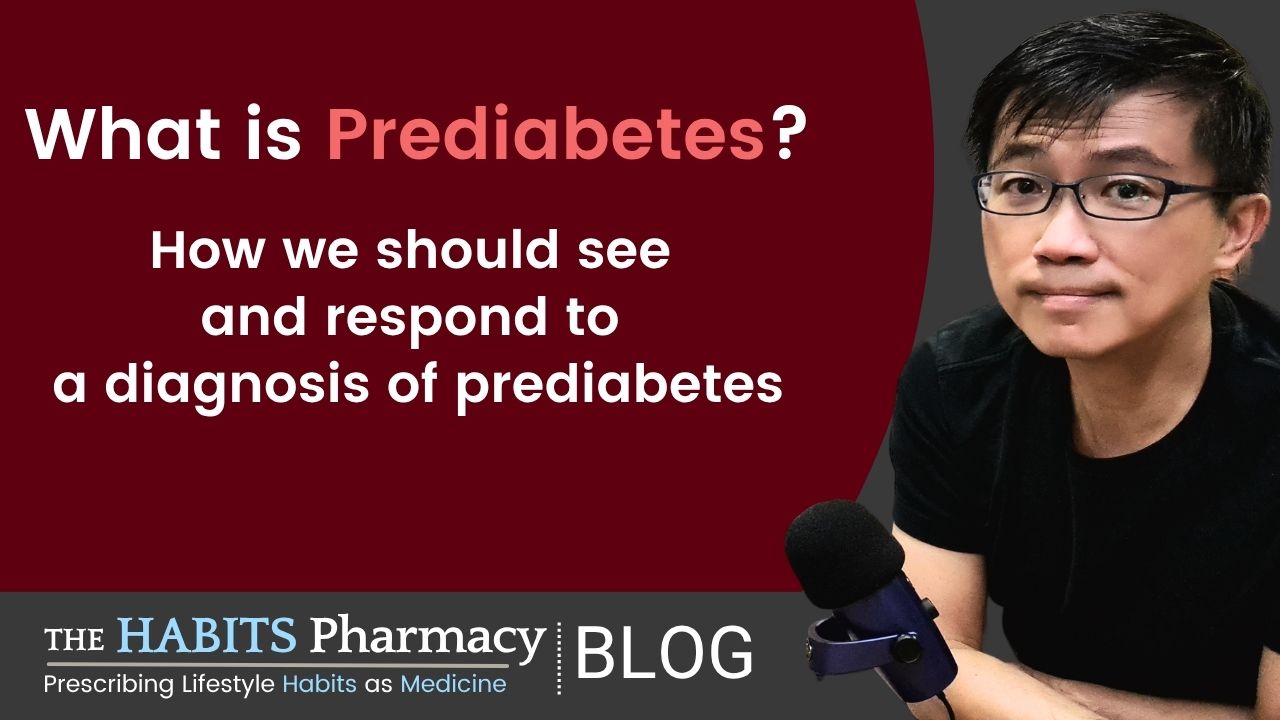
What is Prediabetes? Beyond understanding the medical definition of prediabetes, the most important thing is to know how to see and respond to a diagnosis of prediabetes. That will determine whether one's prediabetes will progress to diabetes eventually or not.
"Doctor, I do not have diabetes. I only have prediabetes. My blood sugar is only borderline high. Why are you still urging me to change my lifestyle and eating habits?"
This is something I hear very often in my clinic.
And it concerns me every time I hear it. Because that wrong mindset behind that question is exactly what makes prediabetes dangerous. Because most of all, a diagnosis of prediabetes is a loud and clear call to action to change and improve one's lifestyle and eating habits.
Watch my video below, or read on.
What is Prediabetes?
Prediabetes is a condition where your blood sugar level is higher than normal, but it did not cross the official diagnostic criteria of diabetes..
That is the simple medical definition. Blood sugar above the normal range. Below the diabetes threshold. In between.
But here is what that definition does not tell you. Prediabetes is not a safe zone. It is a warning zone. And what you do with that warning determines what happens next.
"You've got Prediabetes." - A Cause for Celebration or a Call to Action?
Imagine you went to see your doctor to screen for diabetes. The blood test results come back. Your doctor says: "Your blood sugar is higher than normal. It is not high enough to be defined as diabetes. It is in the prediabetes range."
What would your response be?
Would you breathe a sigh of relief and think: good, I do not have diabetes. Or would you see it as a call to action to make the necessary lifestyle and eating habits changes?
My answer? It should be both.
Yes, it is worth being thankful that you caught this early enough. That is genuinely good news. The window to act is still open.
But please do not stop there. You must also see it as a call to action. Because if you only feel the relief and not the urgency, you are missing the more important half of the message.
Why Most People with Prediabetes Get This Wrong
Sadly, most people with prediabetes tend to be complacent. They take it too lightly. Some brush it off entirely.
Whether consciously or not, many people with prediabetes play it down. When asked if they have diabetes, they say: "No, I do not have diabetes. My blood sugar is only a little bit high. Just borderline."
I understand why. Nobody wants the label. Nobody wants to feel like they are unwell. And borderline sounds so much less serious than a diagnosis.
But prediabetes is a big deal. And it becomes an even bigger deal when it is not taken seriously.
I often use this analogy with my patients. Imagine your child comes home with a report card showing a borderline pass in one subject. Would you say: never mind, at least he passed. Or would you say: we need to do something about this before the next exam?
Most parents would act. Most people with prediabetes do not.
How to See Prediabetes More Accurately
It may be more helpful to think of prediabetes not as "not yet diabetes" but as early diabetes, or mild diabetes. Even though the blood sugar has not yet crossed the official threshold.
The underlying process is already happening. The body is already struggling with blood sugar regulation. The trajectory, if nothing changes, points toward diabetes.
Seen this way, the urgency becomes clearer. And the opportunity becomes clearer too. Because at the prediabetes stage, you still have the window to change that trajectory. That window is not always open forever.
How to Respond to a Prediabetes Diagnosis: The Focus Must Be Lifestyle and Eating Habits
When I tell patients with prediabetes that they need to change their lifestyle and eating habits, some are surprised. They expected a pill. Or a diet sheet. Or perhaps a follow-up appointment in six months.
But the response to prediabetes is not primarily medical. It is behavioural. It is about what you do every day, at every meal, in how you move, in how you manage stress and sleep.
I am not going to tell you exactly which foods to eat or avoid here. That is a deeper conversation, and it is one that needs to be personalised to your situation. Every person with prediabetes is different.
What I will tell you is this. The direction is clear. Improving your lifestyle and eating habits is not optional when you have prediabetes. It is the most important thing you can do. And the earlier you do it, the more power you have to change the outcome.
Work closely with your doctor. Take your prediabetes seriously. Do not wait for it to become diabetes before you act.
If you have prediabetes, I hope this has been useful. And if you have been complacent, I hope this is the nudge that changes that.
Start now. Start today.
Let Habits be Thy Medicine.
Dr Chan Tat Hon
Learning About Reversing Type 2 Diabetes
If you have diabetes and are not as equipped with the essential foundational knowledge about reversing Type 2 diabetes as you should be, I have a structured online learning programme that you might find very useful. You can find out more through the link below.
Related Posts
- Eating Habits for Diabetes: Family Is Key
- Stress, Sleep and Strength: Beyond Dietary Habits for Diabetes
- Can Diabetes Be Reversed? Dr Chan Answers
- Reversing Type 2 Diabetes: Essential Basics Programme
Video Synopsis
In this episode of The Daily Dose, Dr Chan tackles a question he hears very often in his clinic: why should someone with prediabetes urgently change their lifestyle and eating habits when they do not yet have diabetes? Dr Chan explains what prediabetes is, why the complacency that typically follows a prediabetes diagnosis is dangerous, and how the right response is to see it as both a reason for gratitude and an urgent call to action on lifestyle and eating habits.
Full Video Transcript
The following is the full transcript of the video above.
"Doctor, I do not have diabetes, I only have prediabetes, my blood sugar is only borderline high. Why are you still urging me to change my lifestyle habits?" This is something I hear very often in my clinic. And I would like to tackle this question in this episode of The Daily Dose.
Hey guys. Welcome back to my channel. If you are new here, I am Dr Chan. I am a medical doctor from Singapore. I started this YouTube channel, THE HABITS DOCTOR, because I hope that through my videos I would be able to motivate and activate people to take action to unlock the power of habits for health and life, especially in combating lifestyle-related chronic conditions such as diabetes.
The topic of today's episode of The Daily Dose is this: PREDIABETES - lifestyle habits change is imperative. This is part of a series of videos on diabetes lifestyle and eating habits that I have done. If you want to also watch the other videos in this series, you can click the link above. I shall also leave a link to that 'DIABETES, LIFESTYLE and Eating HABITS' playlist in the description section below.
In this video, I do not intend to cover the science, the educational aspects of prediabetes, whether it is about the diagnosis, the progression etc. Because there is no lack of resources online, including on YouTube with regards to that.
Instead, I would like to focus on one aspect of prediabetes that is often neglected and which is critical to preventing and combating diabetes successfully. And that is the mindset, the attitude towards prediabetes.
Most people, when first told that they have prediabetes, often take it too lightly. Some might even brush it off. What do I mean by that.
Perhaps I can explain that better by inviting you to imagine that you have gone to see the doctor to screen for diabetes, and when the blood test results are back and your doctor says to you: "You have a higher than normal blood sugar level, it is not high enough to be considered as diabetes. It is at what we call the prediabetes range."
So, what would your response be, if your doctor had told you this? Does this call for a celebration, or is this a call to action? Will you breathe a sigh of relief and say, this calls for a celebration because I do not have diabetes, or would you see this as a call to action to make the necessary lifestyle and eating habits changes to prevent and retard the progression to diabetes?
What is your answer? Let me put it to you again. The question I am posing to you is this: If you had been worried about diabetes for whatever reasons, and you had gone to see a doctor to check if you have diabetes, and after doing the necessary tests, the doctor tells you that you do not have diabetes but your blood sugar is higher than normal. It is at the prediabetes range. Do you see it as a cause for celebration because you do not have diabetes as you had feared, although your blood glucose was higher than normal? Or do you see it as a call to action to start making lifestyle and eating habits changes? What is your answer? Why don't you type the answer in the comments section below.
Commit yourself. If you were in that position, your doctor told you that you have prediabetes, although it is not in the diabetes range yet, your blood glucose is higher than normal. What would be your answer? Type in your answer, your response in the comment section below.
My answer? The answer should be both. It is a cause for celebration, and you should be thankful that you have detected this blood sugar problem relatively early. But please do not stop there. You must also see it as a call to action to do whatever you can in terms of lifestyle and eating habits change to prevent and retard the progression to diabetes.
But sadly, most people with prediabetes tend to be complacent and do not take prediabetes seriously enough. In fact, most people with prediabetes tend to, whether consciously or subconsciously, try to play down the fact that they have prediabetes, and whenever they are asked whether they have diabetes, would often emphatically reply: "No, I do not have diabetes, my blood sugar is only a little bit high, just borderline high." Perhaps it is a desire of not wanting to have this label of diabetes, or maybe it is just ignorance, ignorance about what prediabetes actually means.
But prediabetes is a big deal and it would become an even bigger deal if one is to ignore it and not make the necessary lifestyle and eating habits change. I often share this analogy with my patients with prediabetes. I would say to them: imagine if your child, who had all along been doing reasonably well in school, came back from school one day with a report card showing a borderline pass grade for one of the subjects. Will you see that as a call for celebration, or would you see that as a call to action for your child to do something to improve on that subject?
Many people when diagnosed with prediabetes would be told by their doctors to make changes to their lifestyle and eating habits, but how many would actually do so, and even amongst those who do, how many would actually do so adequately.
Prediabetes is a big deal, and it would become an even bigger deal if it is not taken seriously, and no action is taken to change and improve one's lifestyle and eating habits, because then the risk of progression to diabetes and the development of diabetes complications is going to be very high.
Perhaps it is more helpful for people with prediabetes to see it as early diabetes or mild diabetes, even though their blood sugar have not yet crossed the level to be officially diagnosed as diabetes. But at the same time, one can still and should see it positively, to see it as a blessing to have found out relatively early enough about their issue with blood sugar, early enough for them to still have the chance to take action to make the necessary lifestyle and eating habits changes to prevent and retard the progression to diabetes.
Being diagnosed with prediabetes should be seen as a wake up call, a call to action to work closely with your doctor and your medical team and make the necessary lifestyle habits changes to keep diabetes at bay.
If you have prediabetes, I hope you have found this video useful, and if you had been complacent, I hope this video would wake you up from that complacency. If there are people you know who also have prediabetes, you might want to share this video with them.
As I shared earlier, if you want to also watch the other videos in this diabetes lifestyle and eating habits playlist, you can click the link above. I shall also leave the link in the description section below. Before you go, if you have not already done so, you might want to hit the SUBSCRIBE BUTTON and NOTIFICATION BELL below to be updated whenever I post new videos.
So that is all for this episode of The Daily Dose, thank you so much for watching, I really appreciate it. Let us unlock the power of Habits, One Habit, One Dose at a time. So till the next episode of The Daily Dose, take care and have a blessed day.
---------- End of video transcript ----------
About Dr Chan, Founder & Medical Director of The Habits Pharmacy
Dr Chan is a medical doctor from Singapore who trains and coaches people to holistically review, change and improve their Lifestyle & Dietary Habits to prevent, control and combat Diabetes, Hypertension, High Cholesterol, Cardiovascular Diseases and other Lifestyle & Diet related chronic diseases. Find out more about Dr Chan, his work, 1-1 coaching programmes, workshops & courses, click on the Find out More button below.
Subscribe to
The HABITS Pharmacy - Habits as Medicine
newsletter
for regular tips & updates on courses and workshops to be equipped to unlock the Power of Habits as Medicine to Prevent and Combat Lifestyle-related chronic diseases.
Unsubscribe anytime